Singapore is the easiest calendar in Asia to plan against and the easiest one to get wrong without noticing.
Easy, because rates are steady, the weather does not have a season that stops events, and the public holidays are published years ahead. Quiet, because the things that will hurt you are not on any venue’s availability chart: a race weekend that empties the hotels, a trade show that books every rigger on the island, a fortnight when a third of your delegate list is with family.
Here is the year as an event planner needs it, with dates verified against the source.
The public holidays
The Ministry of Manpower publishes these. Two years, because most conference planning cycles straddle both.
| Holiday | 2026 | 2027 |
|---|---|---|
| New Year’s Day | 1 January | 1 January |
| Chinese New Year | 17 and 18 February | 6 and 7 February |
| Hari Raya Puasa | 21 March | 10 March |
| Good Friday | 3 April | 26 March |
| Labour Day | 1 May | 1 May |
| Hari Raya Haji | 27 May | 17 May |
| Vesak Day | 31 May | 20 May |
| National Day | 9 August | 9 August |
| Deepavali | 8 November | 28 October |
| Christmas Day | 25 December | 25 December |
The one that shapes a regional event is Chinese New Year, and its footprint is far wider than the two public holidays on the chart. Travel builds for a week before and settles for a week after. Attendance from China, Hong Kong, Taiwan, Malaysia and the Singapore market itself thins across the fortnight, and senior attendance thins first.
Note how far it moves: mid-February in 2026, the first week of February in 2027. A date that cleared last year does not clear this year without checking.
The race weekend
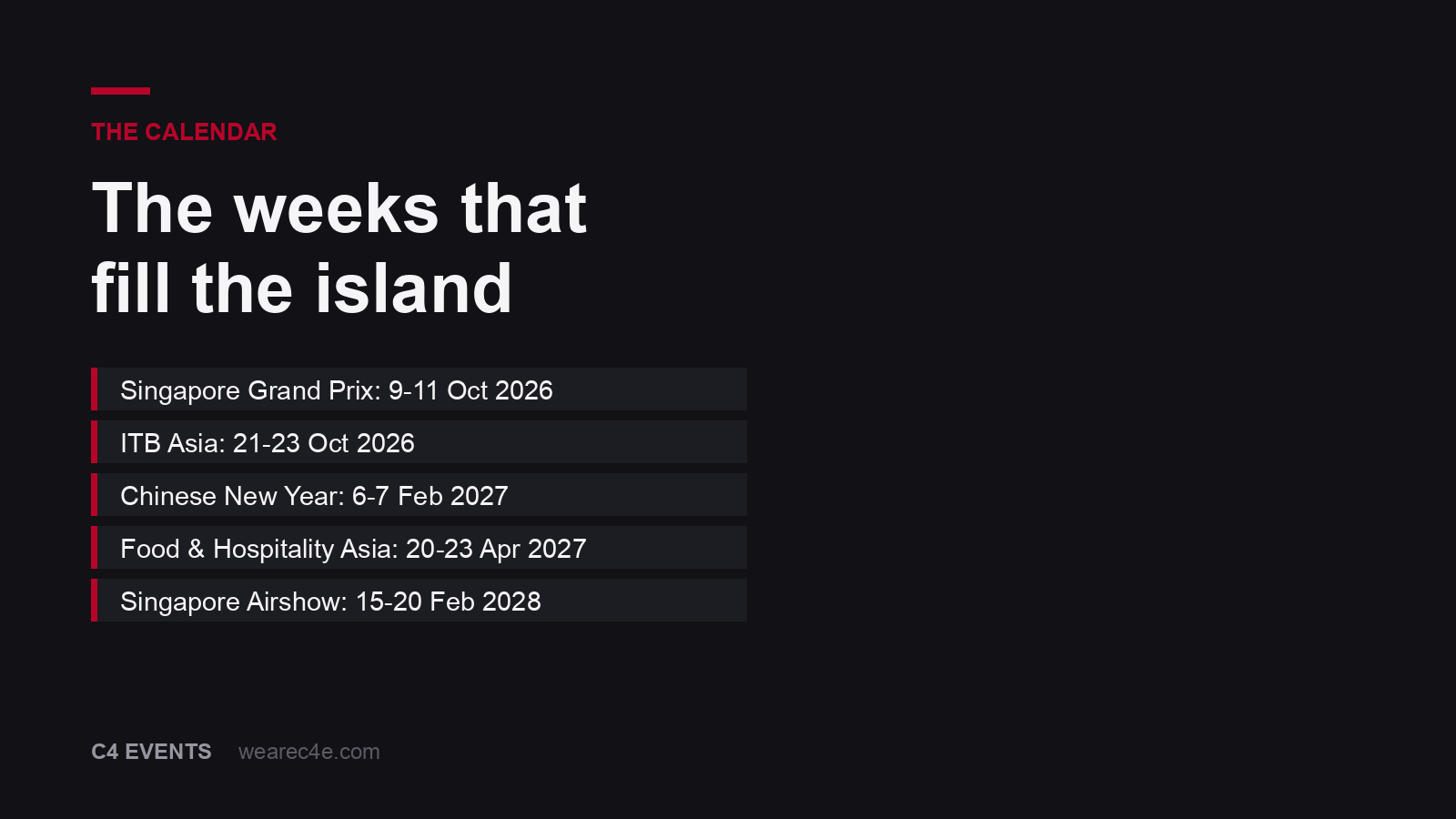
The Formula 1 Singapore Grand Prix is the single largest calendar event for anybody planning a corporate programme here. The 2026 race runs 9 to 11 October.
What it does is take hotel inventory across the whole island, rather than in the districts near the circuit alone, and push room rates up hard for everyone else in town. Demand starts building days before the cars run and the effect covers the full week.
It also does something more subtle. Production crew, LED inventory, rigging and generators are committed to the race and its surrounding hospitality programme well in advance. A conference in that week is competing for suppliers as well as for rooms.
If your event has to be in October, take the weeks either side rather than the middle, and lock your production partner months earlier than you would otherwise.
The shows that fill the convention districts
Singapore’s trade calendar is dense. These are among the largest, with the dates each show publishes.
| Show | Dates |
|---|---|
| Singapore International Water Week | 15 to 18 June 2026 |
| ITB Asia | 21 to 23 October 2026 |
| Food & Hospitality Asia | 20 to 23 April 2027 |
| Singapore Airshow | 15 to 20 February 2028 |
The Airshow is biennial and it is the one that surprises people, because two years is long enough to forget. It fills the aviation-adjacent hotel stock and a good deal of the rest.
Several of these shows carry Approved International Fair status, which matters to exhibitors rather than to organisers and is covered in the guide to Singapore event grants.
The calendar your delegates live in
A Singapore event draws from the region. Their calendars decide your attendance as much as Singapore’s does.
| Market | What to check | Effect |
|---|---|---|
| Greater China | Chinese New Year, Golden Week in October | Whole weeks unavailable |
| India | Diwali, wedding season, March financial year end | Senior travel thins |
| Indonesia and Malaysia | Hari Raya and the travel week around it | Large drop in attendance |
| Europe | August, and the fortnight around Christmas | Approvals stall before the trip does |
| North America | Thanksgiving week, year-end budget cycles | Late confirmations, late cancellations |
The failure mode here is quiet. Every Singapore check clears, the venue is free, the price is fine, and registration lands at 60 percent of target because a third of the invite list is somewhere that does not travel that fortnight. Check the passports on your list against their own calendars before you lock a week.
Booking windows by format
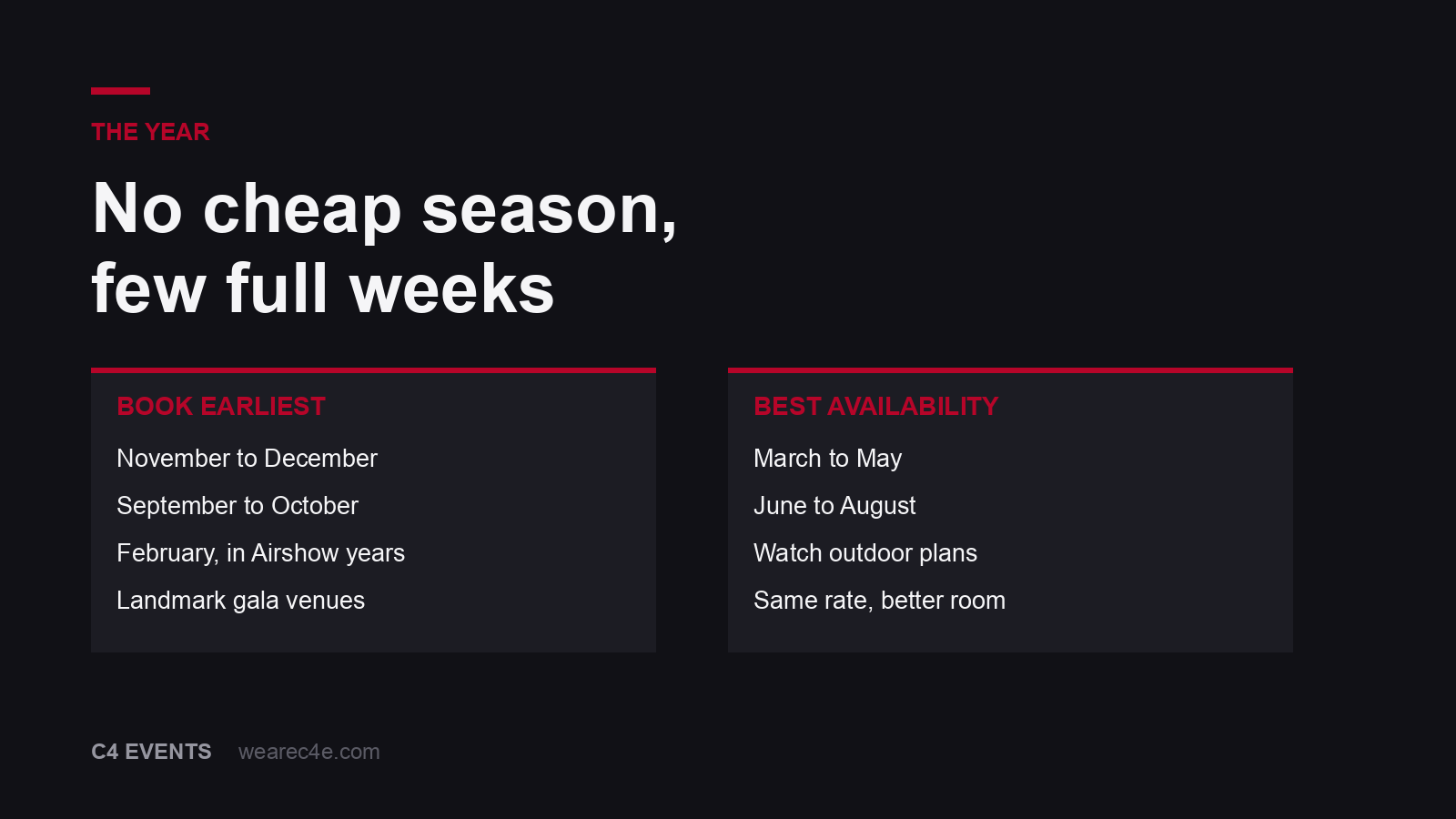
Singapore has no cheap season, so lead time protects your choice of venue rather than your price. That changes what you are booking early for.
| Format | Book ahead |
|---|---|
| Meeting room, under 80 | Four to six weeks |
| Hotel ballroom conference, 150 to 400 | Six months |
| Convention space, 500 plus | Nine to twelve months |
| Landmark or waterfront venue for a gala | Nine to twelve months |
| Anything in October | Twelve months, and earlier if you can |
The venue shortlist those windows apply to is in Singapore conference venues compared.
Weather, and the one risk worth a contingency
Singapore’s weather does not have a season that stops events. It rains hard and it stops, all year, and every venue is built for it.
The risk worth planning for is haze, which appears in some middle-year periods and not others. Indoor events are unaffected. An outdoor reception, a rooftop dinner or a garden gala in an affected week needs an indoor alternative held in reserve, and the reserve needs to be in the contract rather than in a conversation.
That is a cheap insurance policy. Ask the venue what their haze protocol is on the site visit, and whether moving indoors carries a charge.
Why booking early works in a different way here
In most markets, booking early is a price strategy. In Singapore it is an inventory strategy, and the difference changes what you do with the lead time you have.
1/ Prime convention space and landmark venues are held long before the market sees them. The room you want in a good week has been on somebody’s hold since last year, and the question is whether you are on the list rather than what you will pay.
2/ The production bench is finite. Singapore has excellent crew and a limited number of them. In a busy week, the senior show caller, the vision director and the LED inventory are committed months out, and what is left is what is left.
3/ Hotel blocks behave unlike banqueting. A hotel that wants your dinner will price your rooms to get it, and that conversation is worth having in the same meeting rather than two months later when the banqueting contract is already signed.
The practical version: use lead time to secure the room, the crew and the block together, and treat the rate as the thing you influence at the point of commitment rather than the thing you chase afterwards.
The months, in shape
| Period | What is happening | Planning note |
|---|---|---|
| January | Year opens, dinner and dance season closing | Ballrooms still committed |
| February | Chinese New Year, Airshow in its years | The tightest month to plan into |
| March to May | Steady, with the spring show cycle | The best general window |
| June to August | Steady, school holidays, some haze risk | Good availability, watch outdoor plans |
| September to October | The race, then the autumn show cycle | The most expensive weeks of the year |
| November to December | Dinner and dance season, year-end | Ballrooms go first, book earliest |
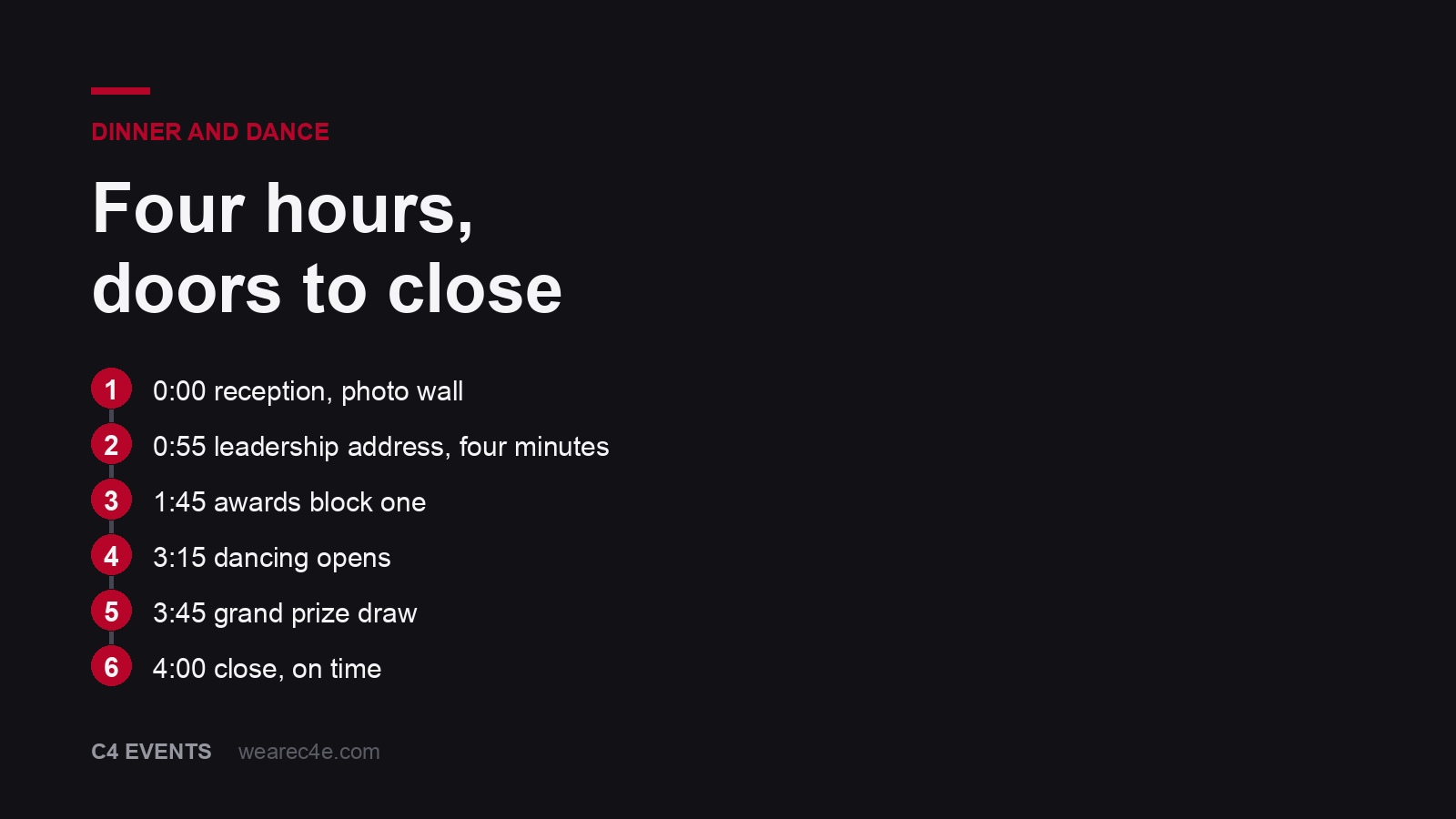
The last row is the one that surprises companies planning their own annual dinner. The format is covered in the Singapore dinner and dance guide, and the short version is that the room is gone before most people start looking.
One more habit worth building. Put the checked dates in the brief itself, with the sources beside them, so the next person who touches the project does not repeat the work or assume a different answer without saying so.
The five-minute check
| Step | Check | What it protects |
|---|---|---|
| 1 | Public holidays, both years | Local attendance and crew availability |
| 2 | Chinese New Year, and the week either side | Regional attendance |
| 3 | The race weekend | Room rates and the production bench |
| 4 | Major show weeks | Convention space and hotel stock |
| 5 | Your delegates’ own calendars | The registration number |
Five checks, and they cost nothing. Skipping them costs a fifth of your delegate list or a five-figure room bill, and you find out which one about eight weeks before the event.
If the date cannot move
Sometimes the week is fixed and the calendar has to be worked around rather than avoided.
Take the shoulder days rather than the centre of a busy week. Book a venue outside the district the show or the race is in, because the pressure is uneven across the island. Hold the hotel block earlier than you would otherwise, and hold more of it than you think you need, since releasing rooms is easier than finding them. Lock the production partner before the competing event does, and put the room-rate exposure in the budget as a line rather than as a hope.
None of that removes the problem. All of it makes the problem smaller and known, which is the difference between a difficult week and a bad one.
Then the rest of the plan
Once the date is clean, the sequence is the grant, then the venue, then the licence. That order matters, because the grant disqualifies you the moment you sign a venue, and the licence question is answered by which venue you chose.
The budget those three land on is in what a corporate event costs in Singapore, and how we run events in the market is on the Singapore page.
If you want us to check a specific week against all of it, send us the date.
What did I miss?
Frequently asked questions
What are the worst weeks to hold a corporate event in Singapore?
The Formula 1 weekend first, because the race takes hotel inventory across the island. Then the largest recurring trade shows, which fill the convention districts and book out the production bench. Then the two weeks around Chinese New Year, when a large share of your regional delegate list is with family.
When is the Singapore Grand Prix?
The 2026 Singapore Grand Prix runs 9 to 11 October 2026. Hotel demand starts building several days before the cars run, so treat the whole week as affected rather than the weekend alone.
What are Singapore’s public holidays in 2027?
New Year’s Day 1 January, Chinese New Year 6 and 7 February, Hari Raya Puasa 10 March, Good Friday 26 March, Labour Day 1 May, Hari Raya Haji 17 May, Vesak Day 20 May, National Day 9 August, Deepavali 28 October and Christmas Day 25 December, per the Ministry of Manpower.
Should we avoid Chinese New Year for a regional event?
For anything drawing from China, Hong Kong, Taiwan, Malaysia or the Singapore market itself, yes. The effect runs wider than the two public holidays: travel builds before and settles after, and senior attendance thins for the fortnight. For an event drawing from Europe or India it matters far less.
Is there a cheap season in Singapore?
No, and that is the defining feature of budgeting here. Rates are steady across the year. What the calendar changes is availability, which means booking early protects your choice of venue rather than your price.
How far ahead should we book a Singapore venue?
Nine to twelve months for prime convention space and landmark venues, around six for a hotel ballroom, and longer again if your dates sit near the race weekend or a major show.
Which trade shows fill Singapore?
ITB Asia in October, Food & Hospitality Asia in April, the Singapore Airshow in February on its biennial cycle, and Singapore International Water Week in June are among the largest. Each takes convention space, hotel rooms and production crew for its week.
Does the haze season affect events?
It can, in the middle months of some years, and it is a risk rather than a fixture. Indoor events are unaffected. An outdoor reception or a rooftop dinner in an affected week is a plan that needs an indoor alternative held in reserve.