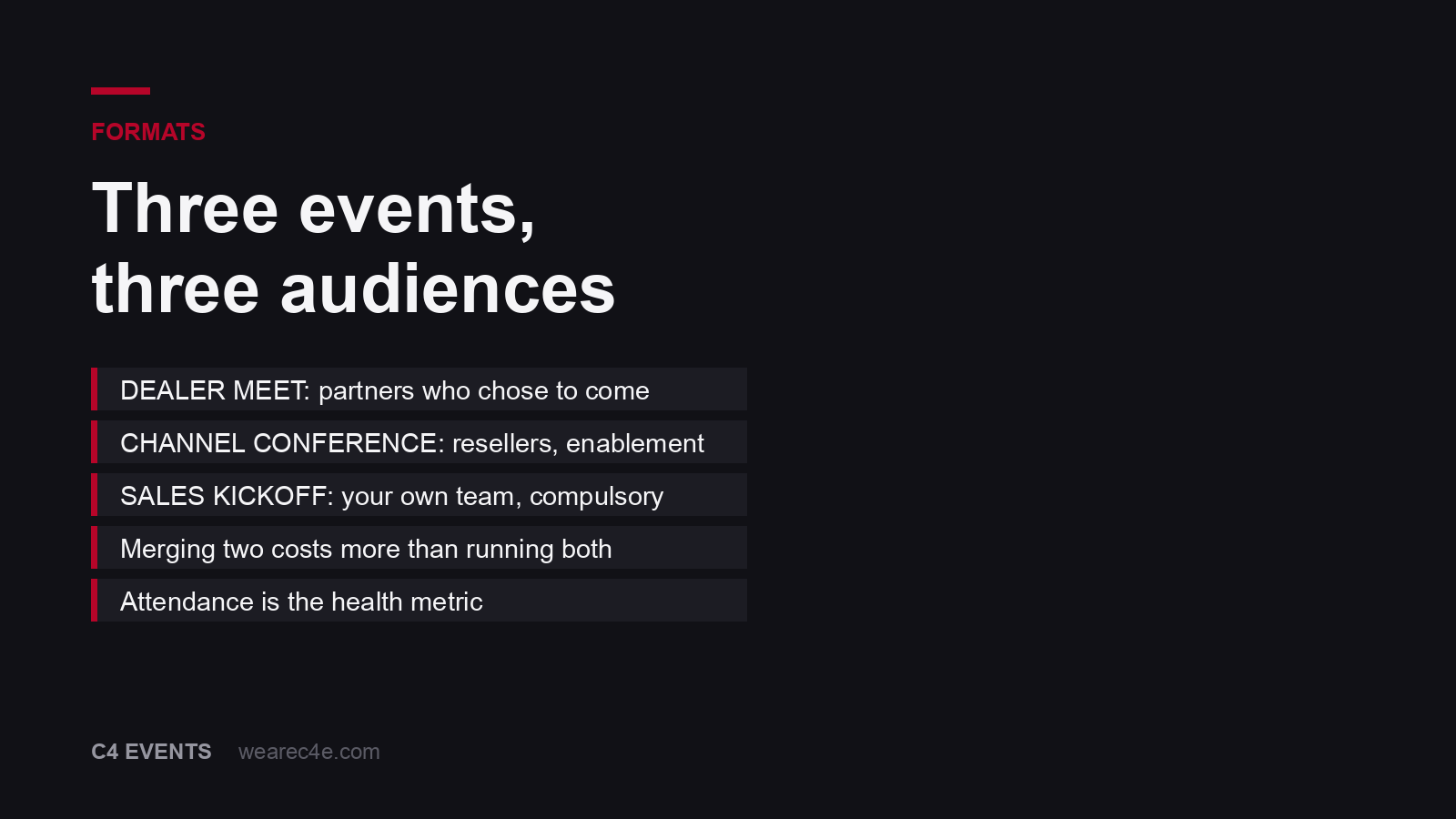
Three events sit in the same slot in most companies’ calendars, get planned by the same team, and are treated as versions of each other. They are not.
The difference is not the agenda. It is who is in the room and whether they had to come.
The three, side by side
| Dealer meet | Channel conference | Sales kickoff | |
|---|---|---|---|
| Audience | Dealers, distributors, partners | Resellers, integrators, partner firms | Your own sales team |
| Attendance | Optional, and a signal | Optional | Compulsory |
| Owned by | Sales leadership | Channel or partner marketing | Sales enablement and HR |
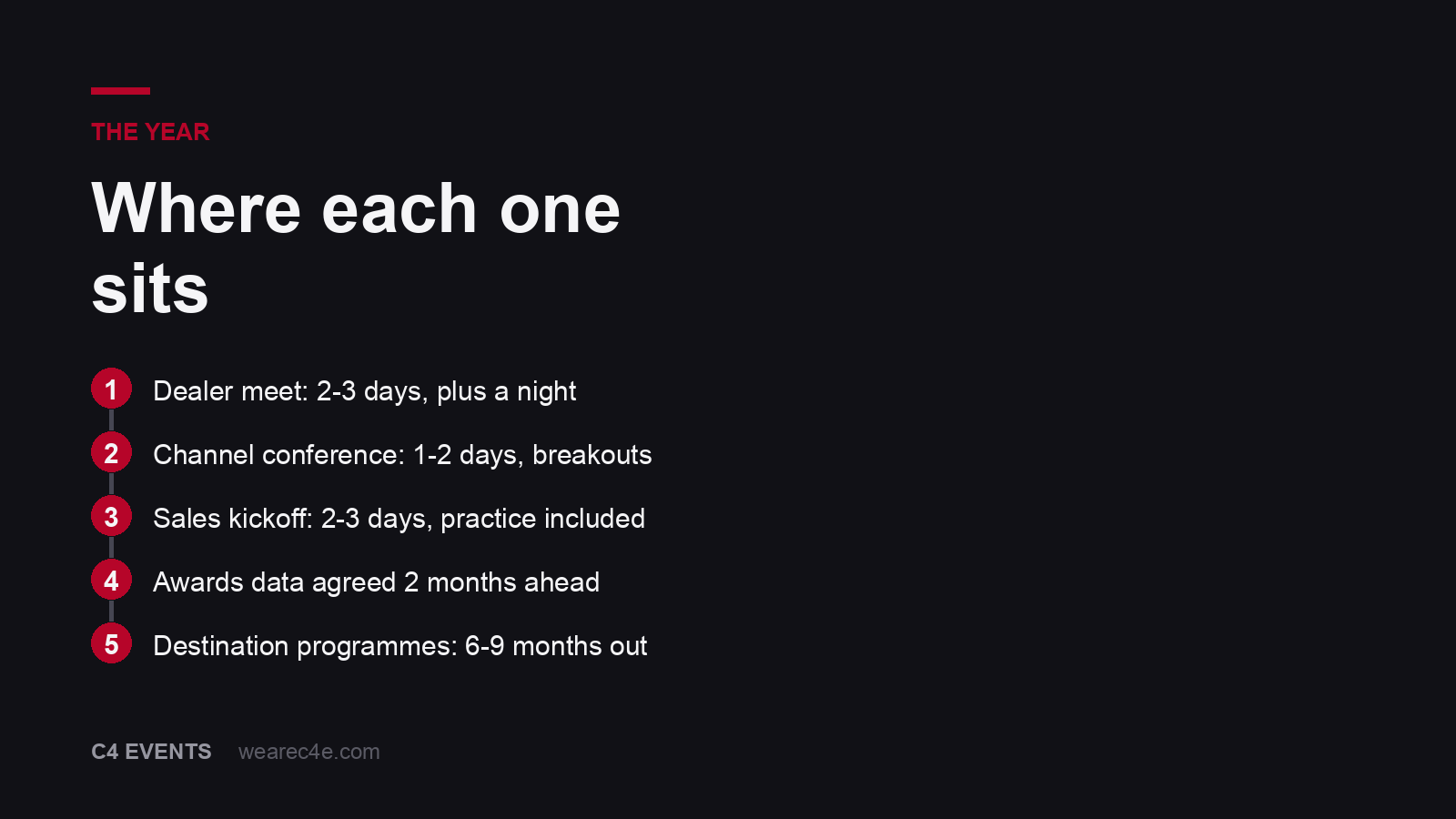
| Length | 2 to 3 days, plus a night | 1 to 2 days | 2 to 3 days |
| The point | Recognition, commitment, what is coming | Enablement, roadmap, pipeline | Alignment, skills, the number |
| Awards | Yes, and often the reason people came | Sometimes | Recognition without the apparatus |
| Budget shape | Rooms, dinner, production, gifts | Meeting space, content, catering | Meeting space, content, one social night |
| Failure mode | Eight hours of your slides | A sales pitch wearing a training badge | A rally with no practice in it |
The dealer meet
Your dealers run their own businesses. They chose to close a showroom for two days and get on a plane, and they can choose otherwise next year. Attendance is a number your sales director should be reading as a health metric.
That changes everything about the design. The event has to be worth their time in a way an internal event does not, and the currency is recognition, access and information they cannot get from their account manager.
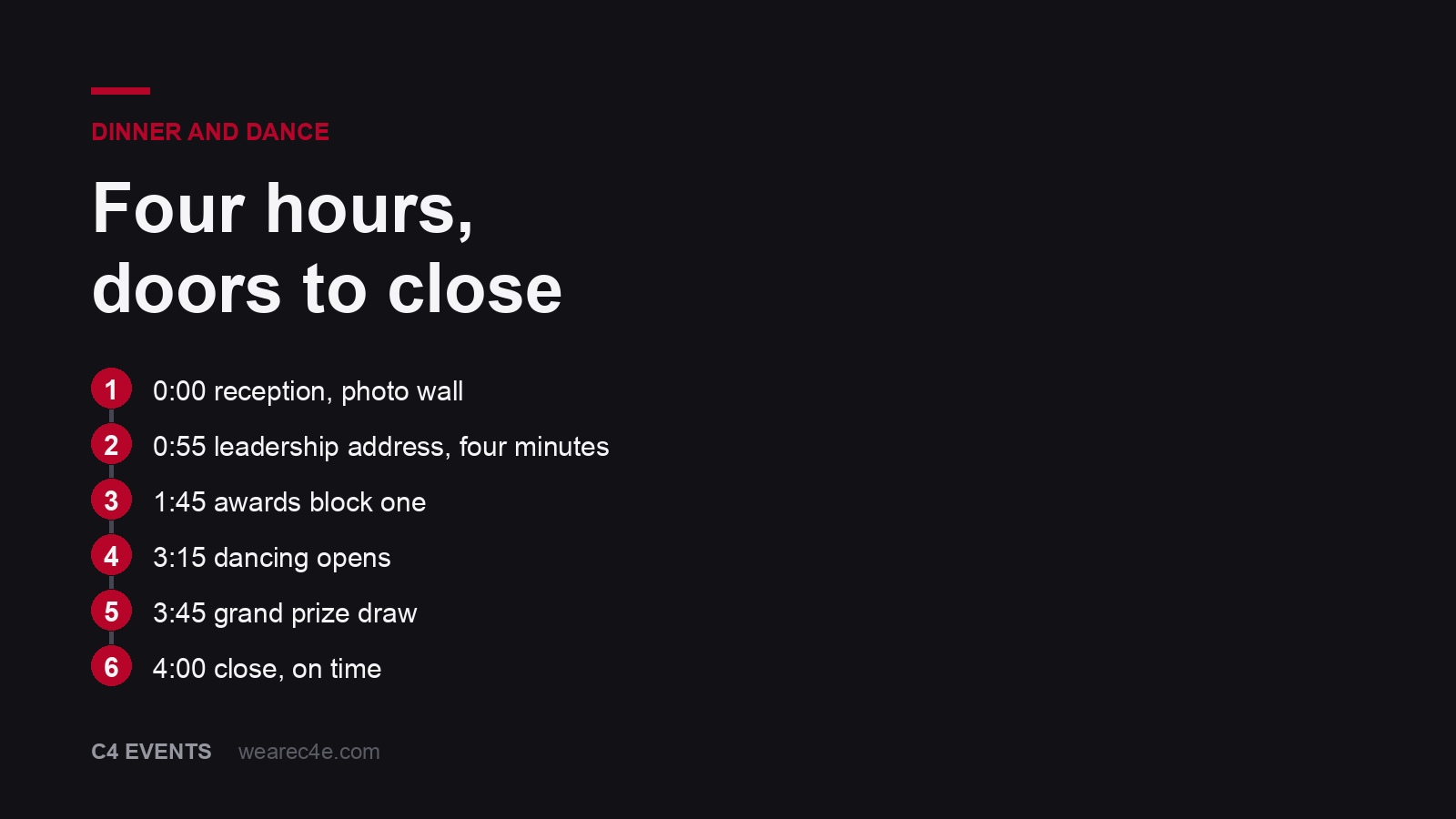
The shape that works: arrivals and a hosted bar on the first evening, strategy and numbers on the second morning, the product reveal after lunch, awards and the gala that night, breakouts and departures on the third morning. The awards are load-bearing. Our dealer meet guide has the full run, and the cost breakdown works through the money.
In the Indian market these run from about USD 25,000 to USD 180,000 depending on headcount, city and production scale. The drivers are nights of accommodation, the awards night and travel distance.
Where it fails. The agenda fills with internal presentations because eleven people inside the company each want fifteen minutes. Partners endure it, the evaluations come back polite, and attendance drops the following year. Protect the agenda from your own organisation, and give the reveal and the awards the room they need.
The channel conference
Different audience, quieter event. Resellers, integrators and partner firms who sell your product alongside others, and whose attention you are competing for against every other vendor in their portfolio.
The job here is enablement, not celebration. Roadmap, certification, deal registration, margin structure, pipeline, and the technical detail their engineers need. The people in the room are practitioners, and they can tell within ten minutes whether the content was written for them or for a marketing deck.
One to two days, meeting rooms rather than a ballroom, and more breakout time than plenary. The best channel conferences feel like a working session with good coffee.
Where it fails. A sales pitch wearing a training badge. Partners attend for capability and get a keynote about your growth story, and the following year the technical people send someone junior. If your roadmap session has a slide about your own revenue on it, the event has drifted.
The sales kickoff
Your own people, in a room, because it is work. That removes the attendance question and creates a different one: this audience will be there whatever you do, so the only measure is whether the quarter changes.
Two to three days. The split we work to is strategy and numbers, enablement and practice, recognition, and unstructured time, in four near-equal blocks. The practice half is what separates a kickoff that works from a rally that felt good and changed nothing. Our sales kickoff guide goes deeper on the agenda.
Recognition belongs here, without the full awards apparatus. A president’s club moment inside a kickoff lands well. A two-hour awards ceremony turns the kickoff into an internal dealer meet.
Where it fails. All rally, no reps. Three days of speeches, one certificate, and a sales team back at their desks on Monday doing what they did before. If nobody role-played, nothing was learned.
Why merging two of them costs more than running both
Every year somebody proposes combining the dealer meet and the sales kickoff to save money. It is the most expensive shortcut in the calendar.
Your sales team cannot hear the honest version of the numbers with partners in the room. Your partners cannot be sold to while listening to your internal targets and your churn analysis. So both agendas get sanitised, both audiences get a diluted event, and you pay full price for two events that half worked.
If the travel budget is the constraint, run them in the same week at the same venue with no overlap in the room. That saves flights, which is where the money was anyway, and it keeps the two conversations apart.
What each one costs, and where the money goes
The three formats have different budget shapes, and a template built for one will mislead you on the others.
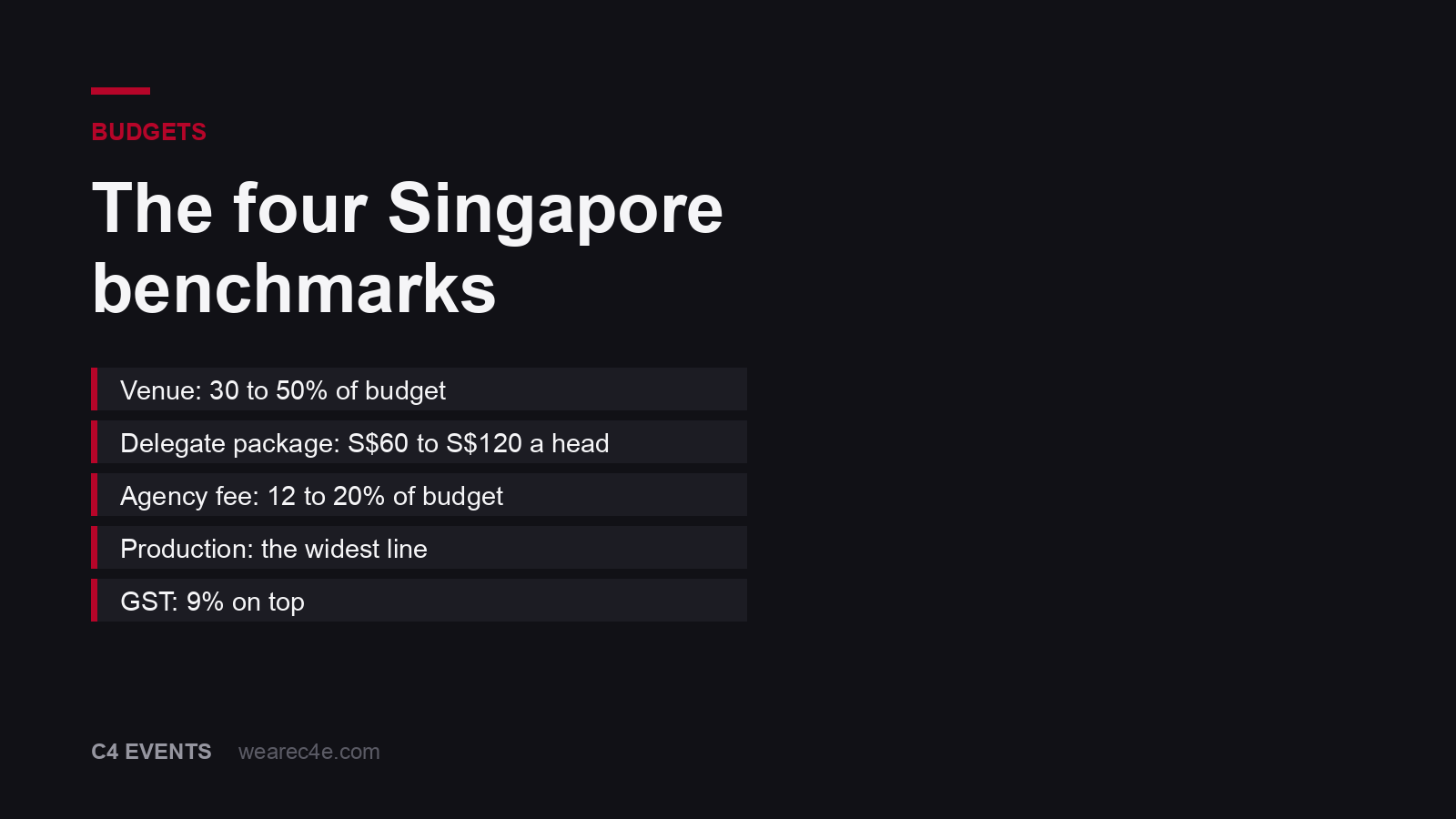
A dealer meet is accommodation, dinner, production and gifts, in that order. Rooms are the largest block because the format needs two or three nights, and the awards night carries a disproportionate share of the production spend because it is the moment the event exists for.
A channel conference is meeting space, content and catering, with production a distant fourth. There is no gala, often no accommodation, and the money that would have gone to a stage build goes to breakout rooms and to the technical people who write the sessions.
A sales kickoff sits between the two. Meeting space, content, one social night, and travel for a team that is spread out. The line most often under-budgeted here is content development, because internal teams assume they will write the sessions themselves and then run out of time in the fortnight before.
Our corporate event budget guide has the split that holds across formats, and the dealer meet cost breakdown goes line by line on the heaviest of the three.
The one thing all three share
A timed agenda that holds.
Every one of these formats has a moment that cannot slip: the product reveal, the awards, the keynote from the person who flew in for two hours. When session three overruns by twenty minutes, that moment gets compressed, and the compression lands on the part you cared about most.
So put a visible countdown on stage and a showcaller with the authority to use it. Our free stage timer does the visible half, and the guide to briefing a speaker on timing covers the conversation that prevents the problem. What to do when a speaker runs over covers the moment it happens anyway.
The lead time each one needs
Three to six months for a city dealer meet, six to nine for a destination programme or anything with international travel. A channel conference can be pulled together in eight to twelve weeks because the production is light and the audience is local. A sales kickoff needs three months, and the constraint is content rather than logistics.
The line that catches people on all three is the awards data. Awards need the criteria agreed, the numbers pulled and the results signed off before invitations go out, and that chain runs through finance and sales operations rather than through the events team. Start it two months before you think you need to, because the argument about who qualifies has to happen somewhere and it should not happen in week two of the production schedule.
How to tell which one you are running
1/ Could someone in the audience decide not to come, without consequence? If yes, it is a partner event and the content has to earn the seat. 2/ Does the room contain people who compete with each other? If yes, the awards and the numbers need care. 3/ Is anyone in the room paid by you? If the answer is everyone, it is a kickoff and practice belongs in the agenda. 4/ What is the one moment the event exists for, and how much of the run sheet protects it?
That fourth question is worth asking out loud in the first planning meeting. Most agendas are built by accumulation, and the moment that mattered ends up at 4:40pm on day two, opposite the airport run.
In the end
These three events look alike from the outside and answer different questions. One asks partners to stay. One asks them to sell better. One asks your own team to change how the quarter goes.
Name which one you are running before anyone books a venue, and defend the agenda from the people who want fifteen minutes in it. The person who wins that argument decides whether the event was worth the flights, and it is almost never the person with the best slides.
What did I miss? If you run all three each year and the distinctions land another way from where you sit, tell us.
Frequently asked questions
What is the difference between a dealer meet and a sales kickoff?
The audience. A dealer meet is for people who buy from you and sell on: distributors, dealers, channel partners, who choose to attend and can choose not to. A sales kickoff is for your own employees, who attend because it is work. That single difference changes the agenda, the venue, the budget and the tone.
Can I combine a dealer meet with a sales kickoff?
You can, and it is the most expensive shortcut in the event calendar. Your sales team cannot hear the honest version of the numbers with partners in the room, and your partners cannot be sold to while listening to your internal targets. Run them apart, even in the same week.
What does a dealer meet cost?
In the Indian market, from about USD 25,000 to USD 180,000 depending on headcount, city and production scale. The drivers are nights of accommodation, the awards night and how far people travel.
How long should each one be?
A dealer meet runs two to three days including a night that matters. A channel conference runs one to two. A sales kickoff runs two to three, and the third day is where most of the useful work happens.
Who should own each event inside the company?
The dealer meet sits with sales leadership. The channel conference sits with channel or partner marketing. The sales kickoff sits with sales enablement and HR together. Three different buyers, three different budgets, and they seldom talk to each other.
What is the biggest mistake on a dealer meet?
Filling the agenda with your own presentations. Partners came to be recognised, to meet each other and to hear what is coming. A dealer meet that is eight hours of slides gets endured, and the attendance next year tells you so.
Do these events need awards?
The dealer meet does, and it is often the reason people came. The sales kickoff benefits from recognition without the full apparatus. The channel conference can go either way, and adding awards to it turns it into a dealer meet with a smaller budget.
How far ahead should I plan?
Three to six months for a city meet, and six to nine for a destination programme or anything with international travel. Awards need longer than people expect, because the data behind them has to be agreed before the invitations go out.